You can’t scale content without scaling compliance
With content created across campuses and teams, manual approvals and accessibility checks don’t keep up. Lytho brings AI into the process—checking content in real time and documenting every decision—so you can move faster and prove compliance when it matters.


From reactive compliance to continuous AI-powered governance
Trusted by creative teams in higher education










“We don’t have to chase requests anymore. Contributors know exactly where to go and how to stay on-brand.”

How Lytho works for higher education teams
Compliance at every step — from creation to content in the wild.
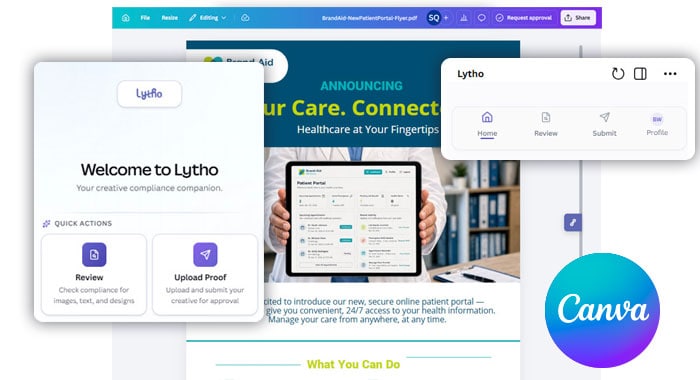
Bring compliance into Canva, Google Slides, CMS platforms, and more. AI checks content in real time—so departments can validate accessibility and brand standards before anything is submitted or published.
 Click to enlarge
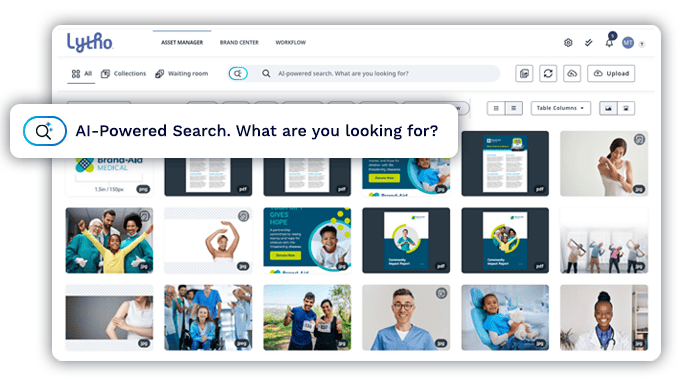
 Create a single source of truth with searchable, AI-tagged assets and built-in accessibility metadata. Teams across campuses can find and reuse approved content instead of recreating it.
 Click to enlarge
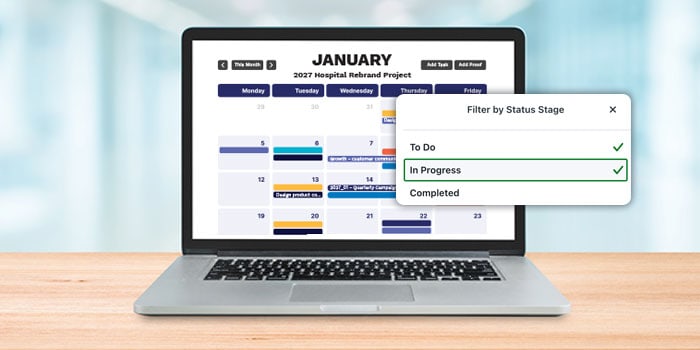
 Centralize feedback, approvals, and version history in one system. Every asset includes documented proof of review and accessibility checks—so you’re always prepared for audits or compliance reviews.
Resources for higher education compliance and content governance
Questions higher ed marketing leaders ask us
Lytho reduces the hidden costs of manual review cycles, rework from missed accessibility issues, and legal exposure from non-compliant content. By automating checks that used to take hours per asset and centralizing approvals, teams reclaim reviewer time for strategic work instead of repetitive proofing—while reducing the risk of costly compliance violations or brand inconsistencies that damage institutional reputation.
Most universities run on a patchwork of tools that don’t talk to each other, which is exactly why enforcement is inconsistent across colleges and departments. Lytho isn’t another disconnected point solution—it works inside the tools your teams already use (Canva, Figma, Office 365, your CMS) to check content in real time, so you get one governed system of record instead of another silo to manage.
Manual review is reactive by nature: issues get caught after content is built, approvals get stuck in email chains, and documentation is inconsistent or missing entirely. Lytho’s AI reviews content for accessibility, brand, and policy standards at the moment of creation, then automatically documents every decision—turning compliance from a bottleneck into a continuous, audit-ready process.
Lytho is built for decentralized institutions: it gives distributed teams across colleges, programs, and campuses the ability to create and publish with confidence, while giving marketing leadership and IT centralized oversight and a single source of truth. Teams keep their existing workflows and tools; you gain consistent standards and visibility without adding approval layers.
Because Lytho integrates into tools teams already use daily, adoption doesn’t require retraining staff on a new platform from scratch. AI guidance happens in-line as people create content, so contributors learn standards in the moment rather than through separate training sessions — and your team can point to clear, documented workflows so everyone knows where requests go and what’s expected.
Both. Lytho itself is WCAG 2 and SOC 2 compliant, and it also actively checks the content your teams produce against WCAG accessibility standards in real time. That means you’re working with a platform that meets rigorous security and accessibility standards while helping you enforce those same standards across every asset your institution creates.
Lytho integrates with platforms your creative and marketing teams already rely on, including Canva, Figma, Office 365, and CMS platforms. AI-powered reviews happen directly inside these tools, so accessibility, brand, and policy checks occur as content is being built — not as a separate, disconnected step after the fact.
Lytho aligns messaging and visual identity across your institution by enforcing brand standards automatically as content is created, regardless of which college or department is producing it. Combined with a governed content library and audit-ready documentation, marketing leadership gets the visibility to protect brand integrity institution-wide without having to personally review every asset.
Build confidence in your content compliance
See how Lytho helps universities scale accessible, compliant content — with clear proof at every step.