Pressure is mounting for marketing teams in banks and insurance companies. As campaign requests surge and regulations tighten, teams must balance brand consistency and FINRA compliance without slowing down or risking costly errors. Manual tracking and scattered tools can’t keep up with the pace or complexity of today’s creative operations, so teams are looking for more robust solutions.
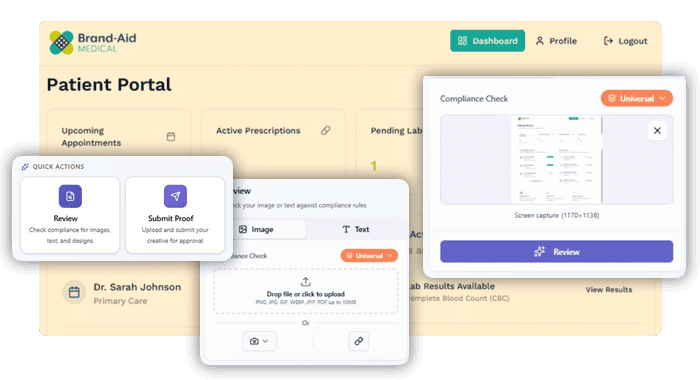
Marketing compliance software helps address these challenges by offering a unified suite of tools that centralize creative workflows, automate audit trails, and enforce brand standards. Financial services teams can use these tools to reduce risk and manage the high demands involved. Fragmented processes and manual oversight raise the chances of missed approvals, regulatory breaches, and operational bottlenecks, so a comprehensive software solution becomes a necessity.
This post highlights the most important features that top marketing operations teams rely on to streamline compliance, centralize workflows, and protect brand integrity. Use this checklist to evaluate solutions with clarity and confidence.
Why compliance at scale requires more than manual processes
FINRA marketing compliance refers to the set of rules and standards from the Financial Industry Regulatory Authority that govern how financial products and services are marketed. Every asset must be reviewed, approved, and documented, often under tight deadlines. Audit trails are detailed records of who approved what and when, while version control keeps only the latest, approved materials in use. Brand governance means having processes and controls in place to protect brand integrity across all channels.
Today, marketing teams face higher campaign volumes and stricter regulatory scrutiny, so each new campaign adds to the operational burden, making manual tracking unsustainable. According to C2B Research (2024), 68% of customers prioritize increasing content volume, showing a broader industry shift. As content needs and compliance demands rise, teams need tools that can keep up.
Manual processes using spreadsheets, email threads, or siloed tools can’t provide the speed, transparency, or accuracy required. Scalable compliance needs automation and a single source of truth, not patchwork solutions.
The most important features top teams prioritize in marketing compliance software
To meet compliance and brand standards at scale, leading teams focus on a core set of features:
Automated audit trails
Automated audit trails capture every approval, edit, and comment, creating a transparent record for regulatory reporting and internal review. This reduces risk and supports compliance teams during audits.
Version control and approval workflows
Built-in version control ensures that only the latest, approved assets are used. Automated approval workflows route content to the right stakeholders, reducing delays and keeping projects on track, which is especially important for maintaining brand consistency and meeting legal requirements.
Centralized asset management
A unified hub for creative intake, review, and asset management removes bottlenecks, so teams can find, update, and share assets quickly. This reduces duplicated work and lowers the risk of outdated materials being used.
Evaluating solutions — a practical checklist for marketing operations managers
Choosing the right marketing compliance software requires a clear, step-by-step evaluation. Use this checklist to compare options:
- Integration: Does the solution offer pre-built connectors for your existing MarTech stack, and is onboarding supported with technical guidance and documentation?
- Automation: Are audit trails, approvals, and asset management fully automated, and do workflows reduce manual steps and support compliance?
- Auditability: Can you easily track every approval, edit, and asset version, and are audit logs exportable for regulatory reporting?
- User adoption: Is the interface intuitive, and are training resources and engagement dashboards available to monitor adoption?
- Reporting: Does the solution provide real-time dashboards for project status, resource allocation, and compliance tracking?
Addressing common concerns:
- Integration complexity: Seek solutions with pre-built connectors and thorough onboarding. Lytho, for example, provides technical support and documentation for a smooth setup.
- Data sync reliability: Look for real-time sync and automated error detection to keep details and assets up to date. Audit logs and uptime guarantees add transparency.
- User adoption: Customizable training and easy-to-use interfaces help teams get started quickly. Engagement dashboards identify gaps, while editable templates and automated workflows deliver immediate value.
Use this checklist to compare vendors side by side. Prioritizing these criteria helps avoid costly mistakes and makes sure your team is prepared for both current and future compliance needs.
Building a future-proof compliance workflow
Managing compliance and creative operations in financial services is complex, but it doesn’t have to be chaotic. Automation, centralized workflows, and strong compliance features are now must-haves for teams facing rising campaign volumes and regulatory scrutiny.
Operational efficiency and compliance go together. By adopting solutions built for scale, like Lytho, marketing operations managers can reduce risk, protect brand integrity, and deliver results faster.
As you review your tech stack, focus on solutions designed for both scalability and compliance. Download our detailed checklist for evaluating marketing compliance software, subscribe to our newsletter for more insights, or read our related post on creative operations best practices.
Frequently asked questions
What are the biggest risks of relying on manual compliance processes in financial marketing?
Manual compliance processes significantly increase the risk of human error, missed approvals, and regulatory breaches, which can result in hefty fines and reputational harm. Without automated tracking, it’s easy for important steps to be overlooked or for outdated materials to slip through, leading to non-compliance. Additionally, manual methods slow down campaign delivery and create operational bottlenecks, making it harder for teams to keep up with regulatory demands. By relying on manual processes, organizations also face challenges in providing clear audit trails, which are essential during regulatory reviews. Ultimately, the lack of automation exposes teams to unnecessary risk and inefficiency.
How can marketing compliance software improve both efficiency and brand governance?
Marketing compliance software streamlines workflows by automating audit trails, approvals, and asset management, ensuring every step is tracked and documented. This automation not only reduces manual effort and rework but also accelerates campaign turnaround times, allowing teams to focus on higher-value creative work. By centralizing assets and enforcing approval workflows, the software guarantees that only brand-compliant, up-to-date materials are used across all channels. Enhanced visibility and control minimize the risk of non-compliance, while consistent brand standards protect organizational reputation. Ultimately, these benefits drive both operational efficiency and robust brand governance.
What should I look for to ensure a new solution will integrate smoothly with my existing MarTech stack?
To ensure seamless integration, prioritize marketing compliance solutions that offer pre-built connectors for the tools your team already uses, along with comprehensive onboarding and technical support. Look for platforms that enable real-time data synchronization to keep information and assets up to date across systems, minimizing manual intervention. Strong documentation and dedicated customer support can further reduce disruption during implementation and boost user adoption. Additionally, consider solutions with open APIs or flexible integration options to future-proof your tech stack as your needs evolve. These features help ensure a smooth rollout, maximize return on investment, and foster long-term team productivity.