A healthcare marketing team faces a tight deadline for a new campaign. As legal and compliance reviews pile up and asset requests flood in from multiple departments, the risk of using outdated or unapproved materials grows by the hour. Every delay or oversight threatens not just the campaign’s success but also the organization’s compliance standing. In this high-pressure setting, even a single missed approval or misplaced asset can lead to regulatory violations and damage to brand integrity.
Compliance automation uses technology to streamline, monitor, and document regulatory processes in healthcare marketing. Yet, despite its promise, many teams still rely on manual workflows and scattered tools, which often result in errors, missed deadlines, and unnecessary risk.
Fragmented approval processes and limited asset visibility put healthcare marketers in a tough spot, forcing them to keep up with regulatory demands while protecting brand consistency. This post outlines the must-have compliance automation features every healthcare marketing team needs, including automated workflows, version control, and audit trails. These tools help reduce manual errors, speed up content delivery, and maintain compliance at scale.
Why compliance automation matters in healthcare marketing
Compliance automation is the backbone of regulated, high-volume healthcare marketing. In an industry where oversight is increasing and content demands are surging, creative and brand leaders need more than manual checklists and email threads. Automated solutions provide a structured, reliable way to manage approvals, asset access, and regulatory documentation.
Manual processes can easily result in missed steps, outdated materials in circulation, or incomplete audit records. This increases the risk of regulatory violations and erodes trust in the brand. The stakes are especially high for healthcare organizations, where even minor errors can have significant financial and reputational consequences.
The industry is moving toward centralized, automated solutions for a reason. Compliance automation is trusted by more than 600 in-house agency teams at Lytho, making it a proven standard for organizations seeking to reduce risk and improve efficiency.
This post highlights evidence-based features that directly address real-world pain points, so teams can move quickly, stay compliant, and scale creative output without chaos.
The three must-have features for compliance at scale
Automated Approval Workflows
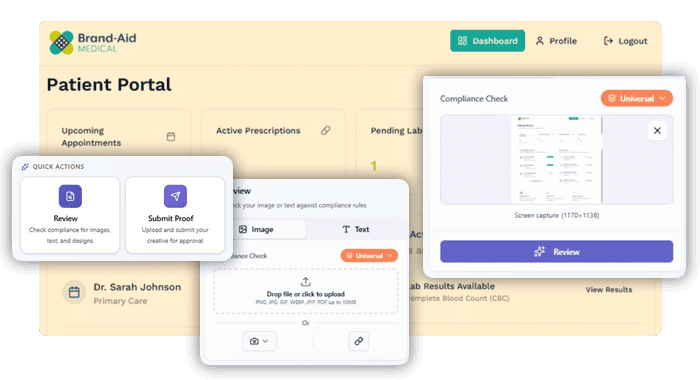
Automated approval workflows help eliminate bottlenecks and speed up the review process. By routing creative assets through predefined approval paths, teams avoid the confusion and delays of manual handoffs. Each stakeholder receives timely notifications, and approvals are tracked automatically, reducing the chance of missed steps.
Automation’s impact on content output is clear. According to Lytho’s 2024 customer survey, 82% of respondents report an increase in content output year over year. With automated workflows, healthcare marketing teams can handle higher project volumes without sacrificing compliance or quality.
Version Control
Robust version control supports both brand consistency and regulatory compliance. In healthcare marketing, assets often undergo multiple revisions to meet legal, regulatory, and brand standards. Without a clear record of changes and approvals, teams risk using outdated logos, product images, or messaging, especially during major launches or rebranding efforts.
Lost or outdated assets can create confusion, slow down campaigns, and introduce compliance risk. Version control ensures that everyone works from the latest, approved materials and provides an audit-ready record of every change.
Complete Audit Trails
Complete audit trails provide the accountability and transparency required by healthcare regulators. These records document every approval, edit, and asset use, making it straightforward to show compliance during an audit or regulatory review.
Audit trails also support operational improvement. With clear audit records, teams can identify bottlenecks, optimize processes, and ensure nothing falls through the cracks.
For healthcare marketers, integration and user-friendly interfaces matter, and adding a compliance solution should not create new layers of complexity. The right tools fit seamlessly into existing workflows, supporting adoption and reducing friction for both designers and non-designers.
Overcoming common objections and ensuring seamless adoption
Some teams worry that compliance automation will limit creative flexibility or be too complex for non-designers. Others are concerned about maintaining brand control as more users contribute to the creative process.
Smart templates and customizable forms address these concerns by allowing brand managers to define project needs and enforce brand standards without restricting creativity. Editable templates empower non-designers to create compliant, on-brand content independently, reducing bottlenecks and speeding up delivery.
Centralized asset management, version control, and approval workflows give brand managers ongoing oversight. Built-in audit trails and usage controls protect brand integrity and regulatory compliance at every step.
Consider a brand manager overseeing a major rebranding initiative. With compliance automation in place, the team can quickly locate the latest approved assets, automate approval workflows, and ensure all creative output aligns with updated guidelines. This shift reduces errors, accelerates timelines, and helps meet regulatory standards during key projects.
A solution such as Lytho brings clarity, compliance, and empowerment to healthcare marketing teams by delivering practical tools that support both operational control and creative excellence.
Empowering healthcare marketers for compliant growth
Automated approval workflows, robust version control, and complete audit trails are non-negotiable features for healthcare marketing compliance. These tools help teams reduce manual errors, accelerate content delivery, and maintain regulatory standards at scale.
A practical, evidence-based method for compliance automation enables marketing teams to focus on high-impact work, build organizational trust, and respond confidently to regulatory demands. As content volume and complexity continue to rise, now is the time to assess your creative operations and consider adopting these features for scalable, compliant growth.
For more tips on compliance automation and creative operations, explore our related guides or subscribe for ongoing insights. If you have questions or want to share your compliance challenges, join the discussion with fellow healthcare marketing professionals.
What are the biggest risks of relying on manual compliance processes in healthcare marketing?
Manual compliance processes are prone to human error, which can lead to missed approvals, overlooked regulatory requirements, and the accidental use of outdated or incorrect materials. These mistakes not only put your organization at risk of costly regulatory violations and fines, but can also damage your brand’s reputation and erode stakeholder trust. Additionally, manual workflows tend to slow down project timelines, making it harder to respond quickly to market changes or urgent requests. By relying on manual methods, teams face increased stress, inefficiency, and a higher likelihood of compliance gaps. Embracing automation helps mitigate these risks by providing a structured, reliable approach to compliance management.
How do automated workflows and audit trails support regulatory reporting requirements?
Automated workflows and audit trails create a transparent, easily accessible record of every approval, edit, and asset use throughout the marketing process. This comprehensive documentation makes it simple to demonstrate compliance during audits or regulatory reviews, saving time and reducing stress. With every action tracked, teams can quickly identify who approved what, when, and why, ensuring accountability and minimizing the risk of non-compliance. These features also streamline reporting by consolidating all necessary information in one place, making regulatory submissions more accurate and efficient. Ultimately, automation provides peace of mind by ensuring your compliance records are always audit-ready.
Will compliance automation tools limit creativity or be too complex for non-designers?
Modern compliance automation tools are designed to empower all team members, including non-designers, by offering intuitive interfaces and customizable templates. Rather than limiting creativity, these solutions enable users to produce on-brand, compliant assets quickly and confidently, without needing advanced design skills. Smart templates and flexible workflows maintain brand standards while allowing creative freedom, so teams can innovate without worrying about regulatory missteps. User-friendly solutions also reduce training time and lower barriers to adoption, making it easy for everyone to contribute. As a result, organizations benefit from faster content creation, greater consistency, and more engaged teams.