Accessibility belongs in the systems teams use every day — not at the end of a checklist.
As marketing operations grow more complex, the stakes have risen. Enterprise teams now manage more channels, more contributors, and more distributed workflows. Organizations face mounting pressure to meet accessibility standards across every digital touchpoint — from public-facing experiences to the internal tools employees rely on.
For too long, accessibility was treated as a website fix or a compliance afterthought. That’s no longer acceptable. Procurement teams, compliance stakeholders, and enterprise buyers now expect accessibility standards to span the full operational ecosystem — DAM platforms, workflow systems, proofing environments, and collaboration tools alike.
Accessibility isn’t just a UX concern. It’s a governance requirement.
Accessibility begins at software procurement
Enterprise organizations are under growing pressure to prove accessibility compliance across their digital ecosystem.
Public institutions, healthcare systems, financial services organizations, and other regulated industries increasingly require vendors to align with standards including:
- WCAG 2.2 AA
- Section 508
- ADA Title II
- EN 301 549
Procurement teams now regularly request VPAT documentation during evaluations. Compliance teams need confidence that platforms meet accessibility standards before contracts are signed.
Too often, accessibility gaps surface late in the buying process — or worse, after implementation.
That creates operational friction for IT, procurement, legal, and the marketing teams trying to move work forward.
It also exposes organizations to unnecessary compliance and reputational risk.
Accessibility is no longer a downstream remediation project.
It has become part of enterprise governance.
Accessibility cannot stop at the website
Many organizations still think about accessibility primarily in terms of public-facing websites. But in reality, marketing and creative teams spend far more time inside the operational systems that support content production and governance.
Teams work inside digital asset libraries, approval workflows, proofing environments, review and annotation tools, project dashboards, and collaboration systems every day. If those systems are difficult to navigate, inaccessible by keyboard, inconsistent for screen readers, or challenging for distributed teams to use effectively, productivity suffers and adoption slows.
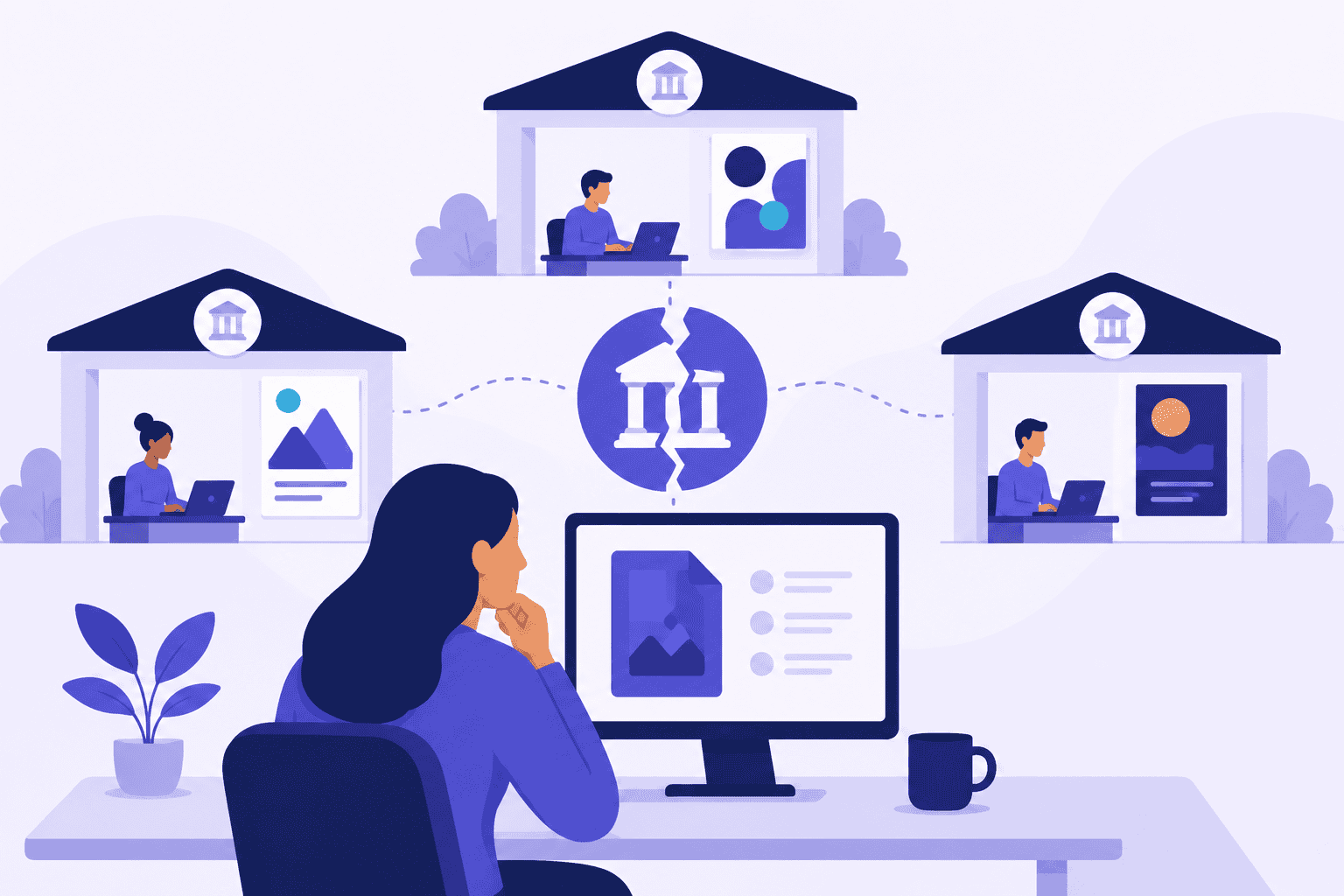
Accessibility issues inside operational platforms also create governance challenges. Teams are forced into manual workarounds, inconsistent processes, and disconnected systems that make it harder to maintain compliance standards at scale.
That is why accessibility cannot stop at the website level. It has to extend across the entire content lifecycle — including the systems responsible for creating, reviewing, approving, storing, and governing content.
Lytho’s content governance platform is accessible
Lytho takes a platform-wide approach to accessibility because accessibility should support how people actually work.
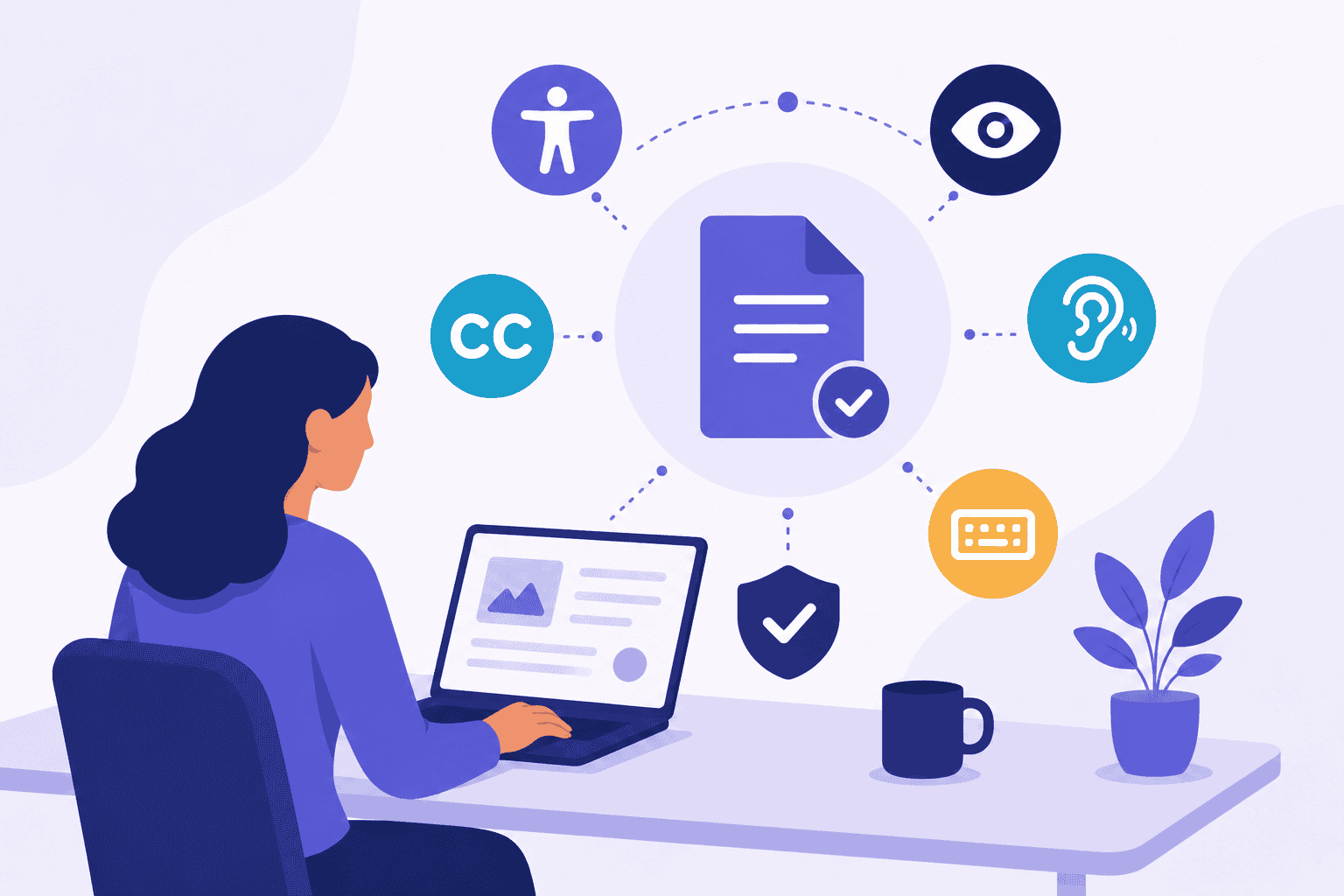
Lytho’s content governance platform meets WCAG 2.2 AA accessibility standards across the full user experience, including Digital Asset Management, Workflow, proofing, and Reviews. Rather than treating accessibility as an isolated feature or a limited compliance initiative, the goal is to apply accessibility standards consistently across the workflows teams use every day.
That includes improvements across keyboard navigation, focus management, semantic HTML, accessible forms, required-field indicators, and color contrast throughout the platform experience.
For teams managing high volumes of content and approvals, consistency matters. Accessibility standards applied unevenly across workflows create friction and confusion for users. A platform-wide approach helps teams collaborate more effectively while supporting operational governance requirements at the same time.
The result is an experience that allows teams to manage work, review content, govern assets, and collaborate across distributed environments with greater confidence and usability.
Lytho helps keep content accessible from the point of creation
Marketing governance is about creating structure that helps teams move faster with confidence.
Accessibility plays a critical role in that structure.
When accessibility standards are embedded into operational workflows, organizations can:
- Reduce compliance risk
- Simplify procurement conversations
- Improve adoption across distributed teams
- Support inclusive collaboration
- Create more consistent user experiences
Instead of treating accessibility as a remediation exercise, teams can operationalize it from the start.
That is the difference between reactive compliance and scalable governance.
Lytho helps organizations build workflows that support both creativity and accountability — without disconnected systems or manual workarounds.
Lytho’s accessibility standards meet those of higher education teams
Accessibility requirements are especially important for public sector organizations and higher education institutions navigating ADA Title II obligations and procurement standards.
Institutions are increasingly responsible not only for their own accessibility posture, but also for the accessibility of the third-party platforms they use.
Lytho supports those requirements with:
- Platform-wide WCAG 2.2 AA standards
- VPAT documentation for procurement reviews
- Accessible workflows across DAM, Workflow, and Reviews
- Ongoing accessibility improvements across the platform
Accessibility supports better work
Creative operations only succeed when every contributor can fully participate.
That includes marketers, designers, reviewers, compliance stakeholders, agency partners, and leadership teams.
Accessibility ensures every user can navigate workflows, review content, and collaborate effectively.
Inclusive systems create stronger collaboration.
Stronger collaboration creates better marketing.
Lytho is committed to building a platform that helps organizations scale content operations while supporting accessibility across the entire experience.
Because governance should create clarity — not barriers.
And accessibility should not be optional for enterprise governance.
Frequently asked questions
What is WCAG 2.2 AA compliance, and why does it matter for enterprise software?
WCAG 2.2 AA (Web Content Accessibility Guidelines) is a widely recognized accessibility standard that helps ensure digital experiences are usable for people with disabilities. For enterprise software, WCAG compliance is increasingly important because procurement teams, compliance stakeholders, and regulated industries often require vendors to demonstrate accessibility through standards such as WCAG, Section 508, ADA Title II, and EN 301 549 before purchasing decisions are made.
Why should accessibility be part of a content governance strategy?
Accessibility is a critical component of content governance because it helps organizations create, review, approve, and manage content in a consistent and compliant way. When accessibility standards are built into workflows, teams can reduce compliance risk, improve collaboration, support inclusive participation, and maintain governance standards across the entire content lifecycle instead of relying on manual fixes after content is published.
What should organizations look for when evaluating an accessible DAM or content governance platform?
When evaluating a digital asset management (DAM) or content governance platform, organizations should look for platform-wide accessibility support, including WCAG 2.2 AA compliance, keyboard navigation, screen reader compatibility, accessible forms, color contrast standards, and available VPAT documentation. Accessibility should extend beyond the website to the workflows, proofing tools, review processes, and collaboration features teams use every day.