Most compliance teams can produce the final version of a campaign.
Far fewer can explain exactly how it got there.
If an examiner asked you to show every review, comment, revision, AI-generated edit, and approval that led to your last major campaign, could you produce that record without searching multiple inboxes, asking team members what they remember, or piecing together renamed files?
For many organizations, the answer is no.
The problem isn’t missing artifacts. It’s missing process.
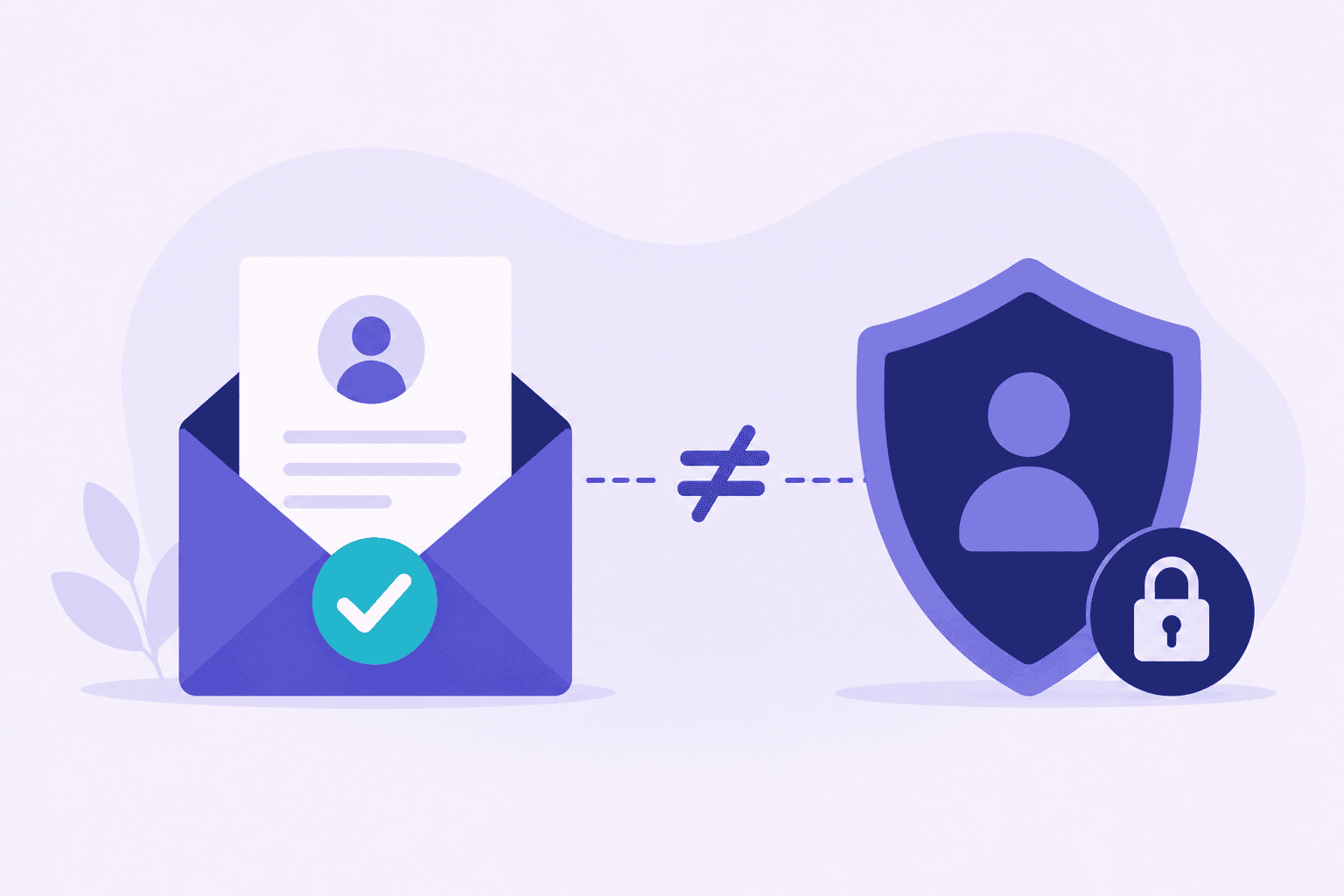
Email threads document that someone approved the work. They don’t prove the right people reviewed the right version, whether required disclosures changed after legal signed off, or how AI-generated language entered the workflow. They capture endpoints, not supervisory control.
That distinction becomes critical during an SEC or FINRA examination. Regulators don’t simply ask whether someone approved a campaign. They ask how the decision was made, who participated, what changed along the way, and whether every material revision received appropriate oversight.
If your team has to reconstruct that story after a document request arrives, your audit trail isn’t complete. You’re rebuilding evidence after the fact.
Strong marketing ideas don’t automatically create efficient content operations. One determines the quality of your work. The other determines whether your team can consistently move that work from brief to launch as volume grows.
When organizations confuse the two, they invest in hiring more people instead of improving the systems supporting those people. The result is predictable: talented marketers spend more time chasing feedback, clarifying approvals, and managing revisions than creating campaigns that drive results.
If your team spends hours reconstructing who approved what, or if compliance still relies on manual handoffs, the problem isn’t your people. It’s the process supporting them. Growing content volume exposed the weakness — it didn’t create it.
Endpoints fail as audit trails
Most organizations believe they have a defensible audit trail because they can produce approval emails and final PDFs.
Those records prove that someone approved the content. They don’t prove how the organization reached that decision.
During an examination, regulators often look beyond the final approval. They want to understand who reviewed each version, what changes were requested, when disclosures were added or removed, whether AI-generated content entered the process, and whether every material revision received appropriate review.
That’s where email begins to fall apart.
Side conversations happen in reply chains. Files get renamed during handoffs. Feedback moves into phone calls or Teams messages. Someone downloads a document, makes offline edits, and uploads a new version without preserving the discussion that led to those changes.
By the end of the process, you have the beginning and the end.
The middle — the part that demonstrates supervisory control — is scattered across multiple systems.
Diagnostic question: Pull one recently approved campaign and try to reconstruct every review, revision, and approval from intake through final distribution.
How much of that history is documented, and how much depends on searching inboxes or asking people what they remember?
The answer tells you whether you have an audit trail or simply a collection of approval records.
Risk hides in the middle
Most organizations carefully document the beginning of the process with intake forms, briefs, and initial drafts. They also document the end with final approval emails and archived assets.
The greatest risk exists between those two points.
That’s where marketing updates a headline after legal approval. A regional team localizes content for a new audience. AI generates replacement copy. A sales presentation removes a disclosure because someone wants a cleaner slide. None of those changes are necessarily inappropriate, but every one of them should trigger additional review.
Consider a simple scenario.
On Monday, legal approves a product brochure.
On Tuesday, marketing updates a paragraph using AI.
On Wednesday, a regional team modifies the disclaimer for a local campaign.
On Friday, an examiner asks which version reached customers and who approved those changes.
Can your organization answer that question with confidence?
Shared drives preserve files. They don’t preserve the reasoning behind them.
That’s why effective governance requires more than documenting approvals. Every material change should trigger the appropriate review, and every review should become part of the permanent record.
This standard isn’t built on distrust. It’s built on the reality that the highest-risk changes often happen after the first approved version leaves legal.
Governance helps you move faster under scrutiny
Many compliance leaders view governance as something that slows work down. In practice, the opposite is often true.
When a document request arrives, speed matters. Reconstructing approval history from inboxes, shared drives, and chat messages takes time and immediately raises questions about the strength of your internal controls. Teams that can produce a complete, time-sequenced record of every review, revision, AI finding, and approval begin the examination with confidence instead of scrambling to assemble evidence.
That difference comes down to how the process is designed.
When review checkpoints, required disclosures, AI-generated content, and role-based approvals are built into the workflow, evidence is created automatically as work moves from intake to publication. Teams don’t have to remember to document decisions because the system captures those decisions as they happen.
The benefits extend beyond audit readiness. Marketing teams spend less time tracking down approvals, compliance teams spend less time reconstructing timelines, and reviewers focus on meaningful feedback instead of administrative work.
According to Lytho’s Governance by Design ebook, one regional financial institution reduced its time to first proof by 35% after implementing structured review workflows. Standardized routing didn’t just strengthen compliance oversight—it also accelerated content production by reducing unnecessary back-and-forth.
Good governance doesn’t create more work.
It removes uncertainty from the work that’s already happening.
How Lytho creates a defensible compliance record
Most organizations don’t need to replace every system they already use. They need a way to connect those systems into a single, defensible record of how decisions were made.
Lytho brings project intake, workflow, proofing, approvals, AI-assisted reviews, reporting, and digital asset management together in one platform while integrating with the tools marketing and compliance teams already rely on.
Instead of piecing together emails, exported PDFs, chat messages, and shared folders, teams can view the complete history of every asset in one place. Every review, comment, revision, approval, AI finding, and version is automatically captured as part of the workflow, creating a time-sequenced record that supports both day-to-day collaboration and regulatory examinations.
That gives compliance leaders the ability to:
- Demonstrate supervisory oversight across the entire content lifecycle.
- Show who reviewed each version, what changed, and when decisions were made.
- Reduce the time required to respond to document requests and audits.
- Improve collaboration between marketing, legal, and compliance without adding manual documentation.
- Scale content production while maintaining consistent governance and regulatory oversight.
The result isn’t simply better documentation.
It’s a process that generates evidence by default instead of requiring teams to assemble it after the fact.
Proof is built into your process, not added afterward
If an SEC or FINRA examiner asked for every version, comment, AI-generated revision, and supervisory checkpoint associated with your last major campaign, could your team produce that record immediately?
Or would someone begin searching inboxes, comparing file names, and asking colleagues what they remember?
That question reveals far more than the quality of your documentation. It reveals the strength of your process.
Organizations that navigate examinations efficiently don’t rely on heroic effort or institutional knowledge. They build workflows that automatically preserve every material decision from intake through final distribution. Every review, revision, approval, and version becomes part of a permanent, time-sequenced record that demonstrates how supervisory decisions were made.
Email can document that someone approved a campaign.
A governed workflow demonstrates that the right people reviewed the right content, at the right time, through a process your organization can confidently defend.
That’s the difference between documenting approval and demonstrating supervisory control.
Frequently asked questions
Email approvals typically capture the final decision but not the process behind it. Regulators often expect organizations to demonstrate who reviewed each version, what changes were made, when material edits occurred, and whether every revision received appropriate oversight.
A defensible audit trail captures every meaningful step in the content lifecycle, including intake, reviews, comments, revisions, approvals, timestamps, version history, and AI-assisted findings. Together, these records create a complete, time-sequenced history that demonstrates supervisory control.
Many organizations improve governance by centralizing workflow and documentation while continuing to use their existing creative, CMS, and collaboration tools. The goal isn’t to replace every application — it’s to create one authoritative record that connects reviews, approvals, and version history across the entire content lifecycle.