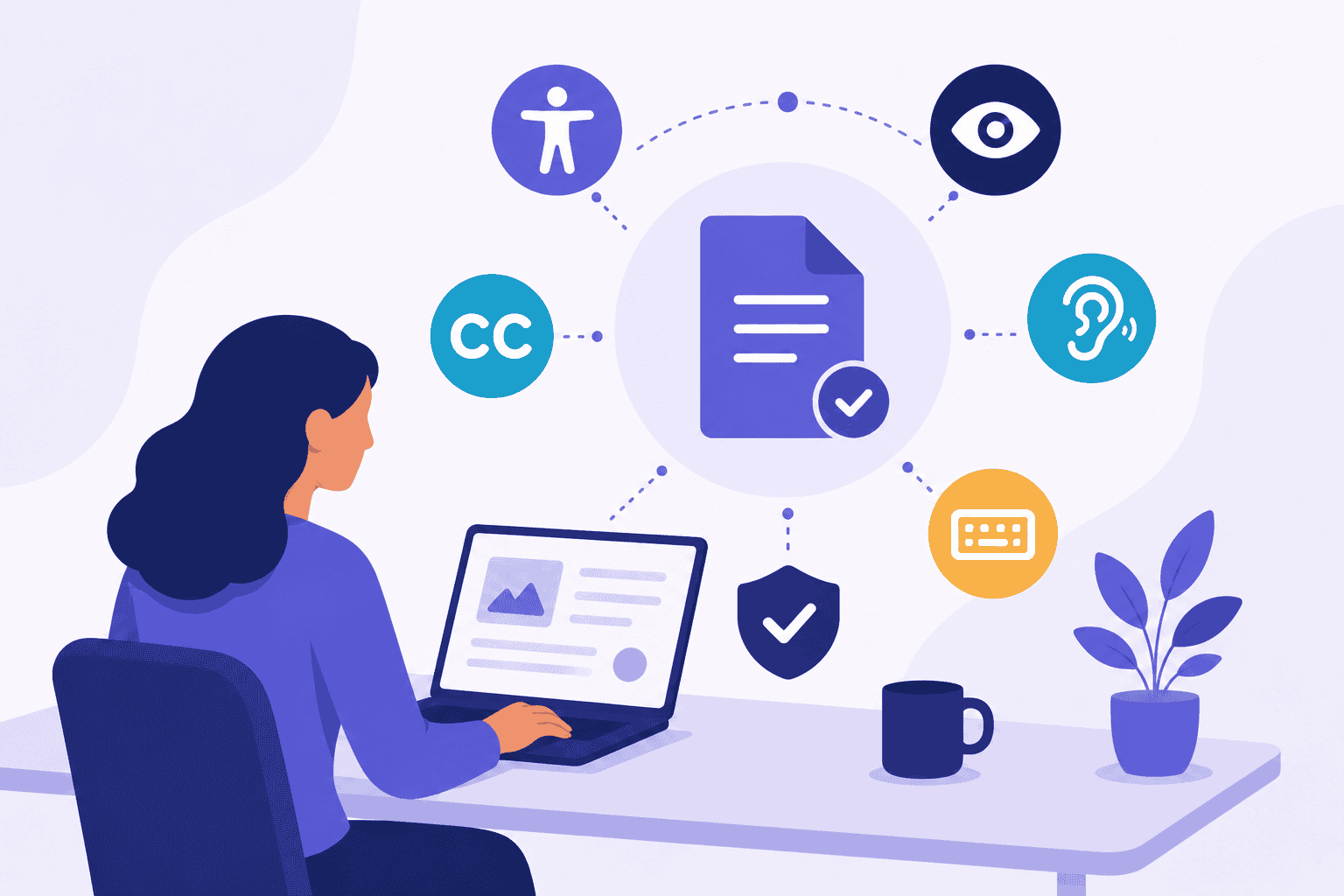
April 2026 is not just a deadline — it’s a wake-up call.
Under updated Americans with Disabilities Act (ADA) Title II regulations, public colleges and universities must bring their digital content into compliance with Web Content Accessibility Guidelines (WCAG) 2.1 Level AA standards by April 24, 2026. These requirements apply to websites, mobile apps, course materials, and more — marking a shift from reactive accommodations to proactive, institution-wide accessibility practices.
But focusing solely on the deadline misses something much more important: accessibility isn’t a sprint — it’s a system.
Why the deadline mindset falls short
Most higher ed accessibility efforts to date have looked like remediation sprints: audit, fix, and hope it sticks.
Yet accessibility failures don’t usually happen because teams don’t care. They happen because content operations weren’t designed to sustain accessibility at scale.
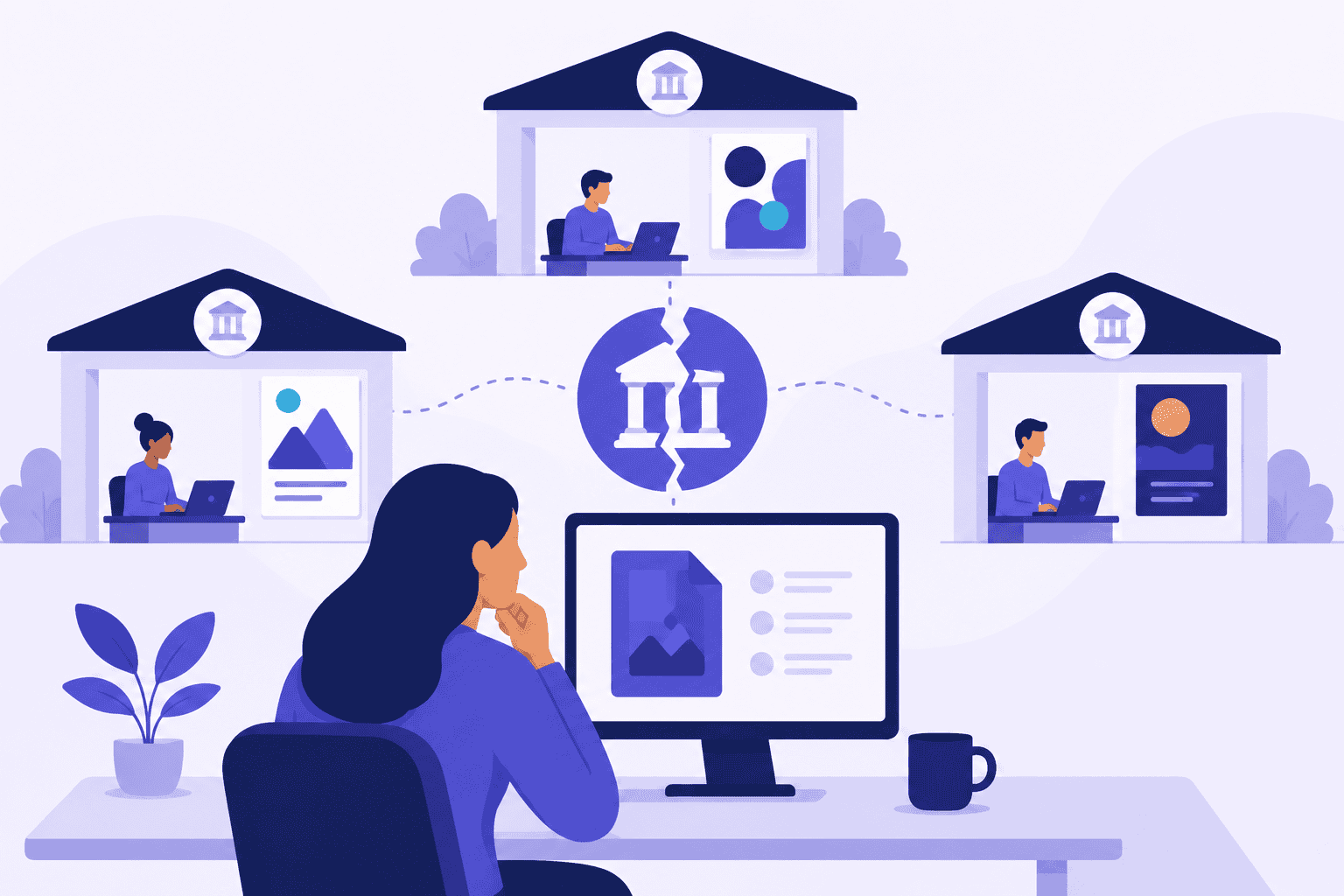
Consider this: higher education institutions manage vast ecosystems of digital assets — admissions materials, financial aid documents, course PDFs, videos, forms, social content, and email campaigns. These assets are created by distributed teams with different tools, standards, and workflows. Accessibility can’t be stitched on after the fact.
And the stakes are real. When digital spaces aren’t accessible:
- Students with disabilities face unnecessary barriers to learning and engagement.
- Institutions expose themselves to legal risk and reputational harm.
- Efforts to improve accessibility regress as new content proliferates.
The April 2026 deadline clarifies what must be done — but the real challenge is how accessibility continues to be maintained.
The real risk lives in everyday content
Here’s why accessibility often breaks down in practice:
- A remediated PDF is downloaded, edited, and re-uploaded without updated accessibility features.
- A captioned video is shared in one system but not captioned everywhere else.
- Multiple versions of the same syllabus circulate with no clear record of accessibility approval.
These issues aren’t isolated. Higher ed institutions are complex organizations where content is constantly created, revised, and published — and digital accessibility must be part of every step.
What sustainable accessibility actually requires
Institutions that maintain accessibility over time tend to share a few operational capabilities:
Shared accessibility standards: Accessibility expectations should be clearly documented, easy to follow, and embedded into templates and guides that content creators use every day.
Accessibility built into workflows: Rather than checking accessibility after publishing, effective processes build accessibility checks into review and approval workflows.
Version control and ownership: Without clear visibility into which assets are current and compliant, organizations risk letting inaccessible versions resurface.
Accountability that scales: Audit trails, approval records, and shared accountability across teams elevate accessibility as a repeatable practice — not a one-off task.
These capabilities support what leaders in the field describe as a shift from “compliance as a project” to compliance as continuous practice — one that sustains accessibility well beyond a regulatory deadline.
From compliance to confidence
Compliance answers a tactical question:
Are we meeting the requirement right now?
Confidence answers a strategic one:
Can we prove our content remains accessible as we continue to create and publish?
Institutions that operate with confidence in their accessibility efforts gain:
- Better readiness for audits and reporting
- Reduced risk from content drift and version confusion
- Shared accountability across distributed teams
- Systems that scale with growth and change
This is a critical transition for higher ed — because accessibility isn’t just a regulatory checkbox; it’s a trust signal to students, families, faculty, staff, and the public.
Why this matters beyond compliance
Accessibility is fundamentally about equity of opportunity. Research shows that students with disabilities encounter barriers in digital environments that can impact their academic success and participation. (ADA National Network)
Moreover, higher education as a sector faces systemic challenges — siloed departments, varied ownership models, and decentralized workflows — that make sustained accessibility difficult without intentional systems. (nationaldisabilitycenter.org)
Accessibility isn’t something you finish.
It’s something you operate.
How Lytho supports accessibility at scale
Platforms like Lytho help institutions embed accessibility into everyday content workflows, offering governance, visibility, and accountability across the entire lifecycle of digital assets.
With Lytho, higher ed teams can:
- Centralize standards and templates for accessible content
- Build accessibility checks into review and approval processes
- Maintain clear records of compliant assets
- Reduce risk from uncontrolled versions and duplicate content
Rather than relying on sporadic reviews or manual enforcement, accessibility becomes part of how content gets created and published — not something bolted on at the end.
When accessibility is sustained through systems and workflows, institutions can stand behind their compliance every day, not just on a calendar date.
Accessibility is ultimately about trust
When digital content is accessible:
- Students can participate fully in learning, regardless of ability.
- Families and communities can access key information without barriers.
- Institutions reinforce their commitment to inclusion and equity.
The April 2026 deadline may be the catalyst for action — but building sustainable systems is the real goal.
Accessibility isn’t a finish line.
Frequently asked questions
What is the ADA Title II digital accessibility deadline for colleges and universities?
Public colleges and universities must comply with updated ADA Title II digital accessibility regulations by April 24, 2026.
This means all digital content — including websites, mobile apps, course materials, PDFs, and videos — must meet WCAG 2.1 Level AA standards.
The deadline marks a shift from reactive accommodations to proactive, institution-wide accessibility practices.
Why isn’t fixing accessibility issues once enough for higher education compliance?
Accessibility in higher education cannot be treated as a one-time remediation sprint because digital content is constantly being created, edited, and republished.
Common breakdowns happen when:
-
Accessible PDFs are updated and re-uploaded without compliance features
-
Captioned videos aren’t captioned across every platform
-
Multiple versions of documents circulate without approval tracking
Sustainable ADA compliance requires ongoing systems, workflows, and accountability — not just last-minute fixes.
How can universities maintain WCAG and ADA compliance over time?
Universities maintain long-term WCAG and ADA compliance by embedding accessibility into everyday content operations.
Effective institutions typically implement:
-
Shared accessibility standards and templates
-
Built-in review and approval workflows
-
Version control to prevent outdated, inaccessible assets
-
Audit trails and accountability across distributed teams
Platforms like Lytho support this approach by helping institutions govern digital content, reduce version drift, and sustain accessibility at scale beyond the 2026 deadline.