Content creation has changed — and AI is accelerating that change faster than most organizations can keep up.
For the first time in a major technology shift, adoption isn’t happening from the ground up. It’s being pushed from the top down. Leaders expect teams to move faster, produce more, and adopt AI quickly.
But governance hasn’t kept pace.
The result is a growing imbalance: content is scaling rapidly, but governance is not.
Why is content governance breaking down in the age of AI?
Content creation is no longer centralized. It happens across teams, tools, and channels, often at the same time and without coordination.
Sales teams are building their own materials. Marketing teams are publishing directly to channels. Regional teams are adapting content locally. And increasingly, AI is enabling all of them to create faster, with fewer constraints.
If social media gave everyone a voice, AI has made everyone a content creator.
The problem is that governance models haven’t evolved to match. Most organizations still rely on a linear process — create, review, approve, publish — built for a world where content moved through controlled systems.
Today, much of it doesn’t.
What is the content governance gap?
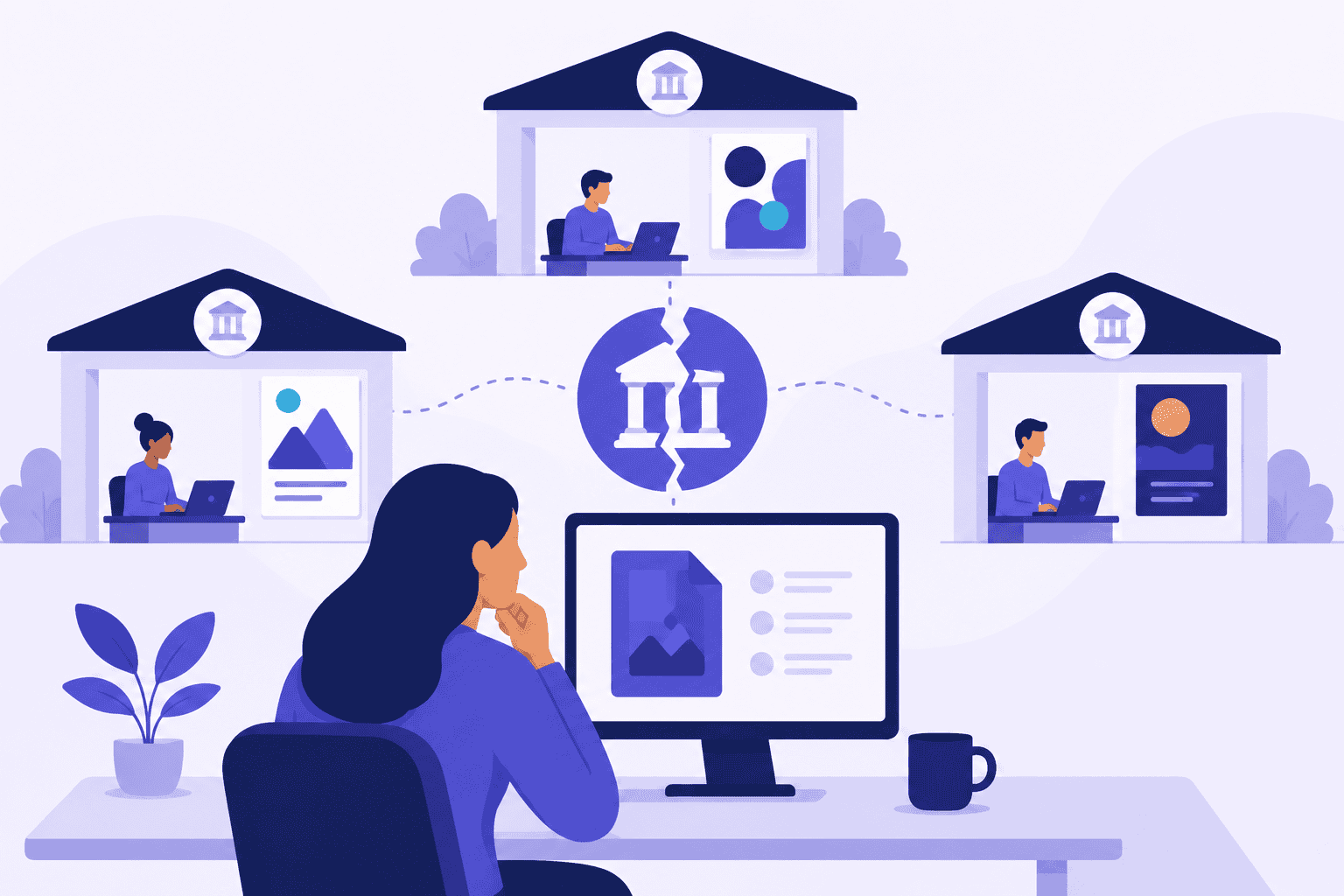
The content governance gap is the disconnect between where content is created and where it is governed.
Content is now created across the organization by a wide range of contributors, often at increasing speed. Governance, on the other hand, is still concentrated in a limited set of workflows and handled through manual review, usually after the work is done.
That gap is where issues emerge. Brand inconsistencies slip through. Required elements are missed. Content is published without ever being reviewed.
Most organizations are not lacking governance processes. They have guidelines, workflows, and approval systems in place.
The problem is that those systems only work where they are applied. When content is created outside of them, governance does not follow.
The issue is not effort. It is coverage.
Why is content governance getting harder to scale?
The gap is widening because content creation itself is accelerating.
AI increases output. New tools make publishing easier. More teams are involved in creating brand-facing content. And much of this work happens outside traditional systems.
These shifts make organizations faster, but they also make control harder.
The impact shows up in familiar ways. Teams spend more time fixing issues late in the process. Review cycles stretch longer because more needs to be checked. Content is duplicated because existing assets can’t be found or trusted. In regulated environments, the stakes are even higher, as missed disclaimers or unverified claims introduce real risk.
At the same time, organizations are stuck in a difficult position. Move quickly with AI, and risk brand and compliance issues. Move cautiously, and risk falling behind.
Neither approach addresses the root of the problem.
Why don’t traditional content review workflows scale?
Traditional workflows rely on centralized, manual review. They assume that content will pass through a defined process before it is published.
That assumption no longer holds.
When content is created across dozens of tools and by hundreds of contributors, there is no practical way for human review alone to keep up. Adding more reviewers or more steps only slows things down without solving the underlying issue.
The model itself doesn’t scale to the speed and volume of modern content creation.
What is embedded content governance?
Embedded content governance shifts governance earlier in the process. Instead of applying standards after content is created, it applies them during creation.
This approach is often described as “shifting left,” but the idea is straightforward: governance becomes part of how work gets done, not something that happens after the fact.
In practice, this means governance is no longer limited to a single workflow or system. It shows up wherever content is created, and it continues through the full lifecycle of that content.
The goal isn’t to remove human judgment. It’s to make that judgment more consistent and scalable.
How do AI teammates improve content governance?
Making governance part of the creation process requires a way to apply expertise continuously, not just at the end.
This is where AI teammates come in.
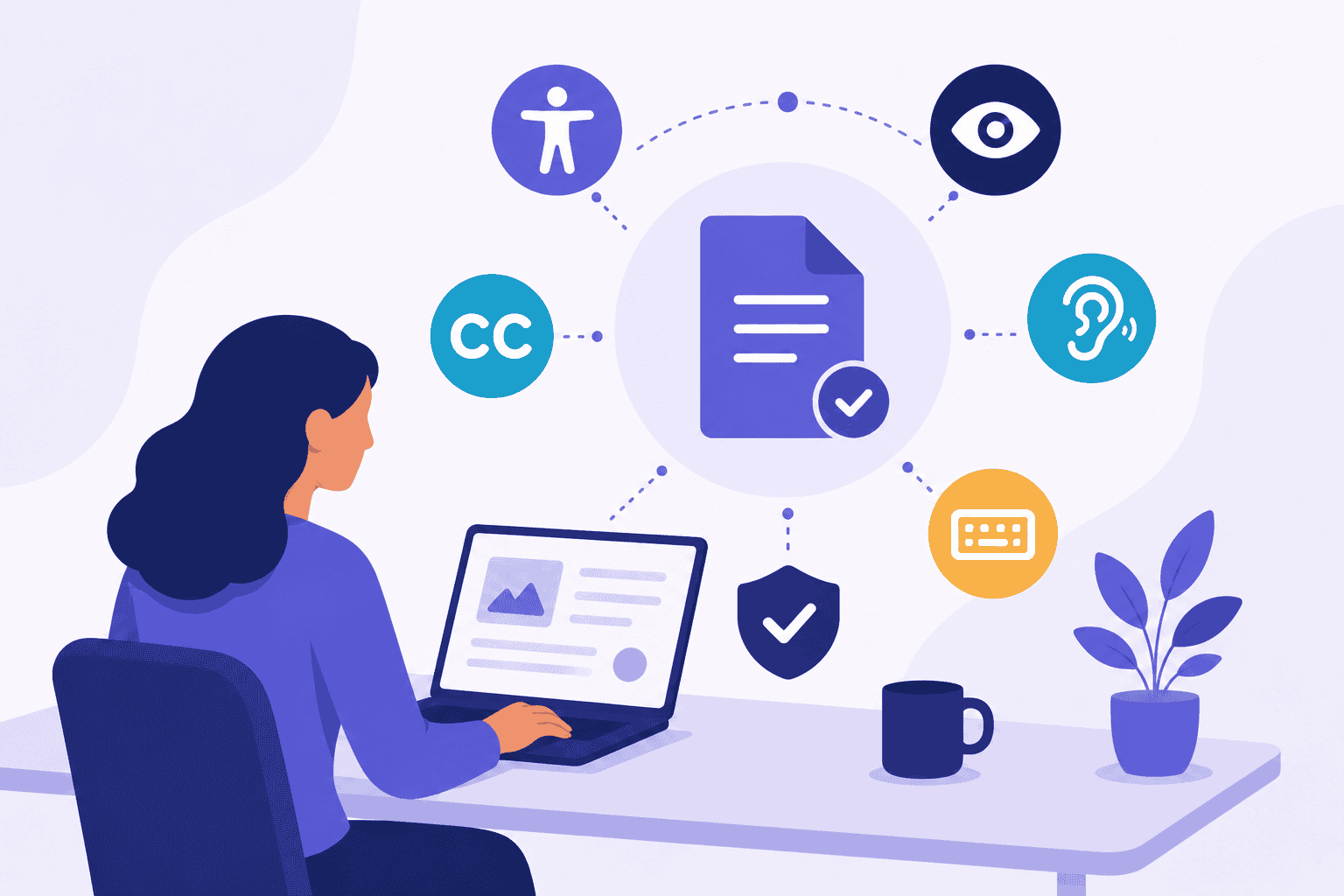
AI teammates act as always-on extensions of brand, compliance, and operations teams. They apply the same standards across content, regardless of where it is created, and they do it in real time.
Instead of waiting for a formal review, issues can be flagged as content is being written, designed, or adapted. Instead of relying entirely on downstream stakeholders, teams can resolve problems earlier, before they create delays or risk.
They also make governance portable. Standards are no longer confined to a single system. They can extend into the tools people already use, whether that’s an AI writing tool, a design platform, or a browser-based workflow.
Importantly, AI teammates don’t replace human reviewers. They reduce the burden on them, so human expertise can focus on higher-value decisions instead of catching avoidable mistakes.
What does scalable content governance look like?
Scalable governance is not about adding more control points. It’s about creating a system that works across how content is actually created.
That system connects workflows, tools, and content systems so governance is applied consistently from start to finish.
When this is in place, organizations can catch issues earlier, maintain visibility across teams, and scale content production without increasing risk. Governance stops being a bottleneck and becomes part of the process itself.
How do you close the content governance gap?
Closing the gap requires more than refining existing workflows. It requires rethinking how governance is applied across the entire content lifecycle.
That means embedding governance into workflows, extending it into creation tools, and strengthening content systems so they can support AI-driven creation at scale.
Lytho AI Teammates are built to support this model.
By combining AI teammates with workflows, content systems, and integrations, it enables organizations to apply governance wherever content is created — and at the speed modern teams require.
Frequently asked questions
How do companies keep AI-generated content on brand?
Companies keep AI-generated content on brand by embedding governance directly into the content creation process. Instead of relying only on manual reviews at the end, organizations are using AI-powered governance tools to check brand standards, messaging, and compliance in real time as content is created.
Why is content governance so hard to manage at scale?
Content governance becomes difficult to scale when content is being created across many teams, tools, and channels at the same time. Traditional review workflows were designed for slower, centralized processes and can’t keep up with the speed of AI-driven content creation.
Can AI help with content compliance and brand governance?
Yes. AI can help organizations improve content compliance and brand governance by automatically flagging issues like missing disclaimers, inconsistent messaging, or off-brand content before it gets published. This helps teams move faster while reducing risk.