Content creation has changed. It no longer happens in one place or within a single team. Today, content is created across a wide range of tools and by people throughout the organization. Sales teams build presentations, marketing teams publish directly to channels, and regional or partner teams adapt content for their own needs. Increasingly, AI is accelerating this activity, making it faster and easier to produce content at scale.
But while content creation has evolved, governance has not kept pace.
Most organizations still rely on a familiar model where content is created, then reviewed, then approved. That model assumes content flows through a controlled system and that a central team can maintain oversight. In practice, content is now created across too many tools, by too many people, at too high a volume for that model to scale.
This creates a gap between how content is created and how it is governed. And that gap is where risk, inconsistency, and inefficiency emerge.
A new model: AI-powered content governance
Closing that gap requires more than adding process. It requires a different approach.
Lytho AI teammates introduce a model where governance is embedded directly into how content is created, reviewed, and managed. Instead of relying on manual checks after the fact, AI works alongside your team to apply brand and compliance standards consistently across every stage of the content lifecycle.
This is not about replacing human judgment. It is about extending it. AI handles the repetitive, mechanical checks that slow teams down, while human reviewers focus on strategic decisions and creative direction.
The result is a system where governance scales with content creation instead of working against it.
Embed compliance directly into your workflows
In most organizations, compliance is enforced late in the process. Issues are caught during review, or sometimes after content is already live.
Lytho AI moves compliance earlier.
With AI Reviewers, AI participates directly in your proof workflows as a named reviewer. It evaluates content against brand guidelines, regulatory requirements, and quality standards, and flags issues with suggested fixes directly in the proof.
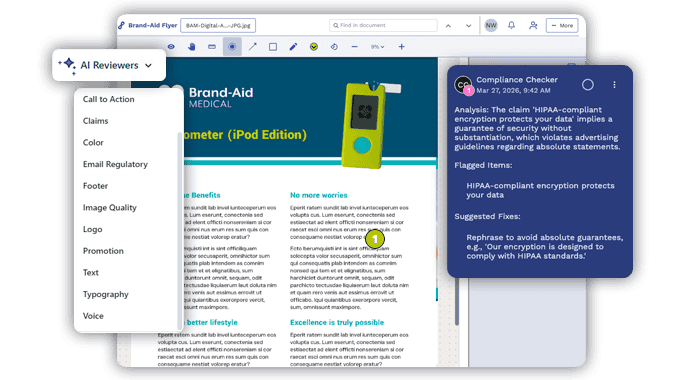
These checks happen automatically and consistently, ensuring that mechanical compliance issues are caught early so human reviewers can focus on higher-value feedback instead of repetitive validation.
For teams managing content at scale, the impact is immediate:
“The progression of Lytho’s features is always exciting. The development of AI within the review workflow space would have a significant impact on our team, as we support five different lines of business encompassing over 50 brands—all with unique brand guidelines. Leveraging AI to review assets against our own brand guidelines and the specific directions we set would save time for VSP’s proofers, Art Directors, and requesters, while also reducing review versions. That additional time could then be reinvested in strategic development for larger projects.”
Amber Wong, Business Analyst, VSP
Check content where it’s created: in your browser and in Canva
Governance cannot be limited to a single workflow. It needs to extend into the tools where content is created.
With the Lytho Chrome extension, teams can capture and check content directly from any web-based tool, including CMS platforms, social channels, and presentation tools. This allows users to run a brand and compliance check before content is ever published, without leaving their browser.
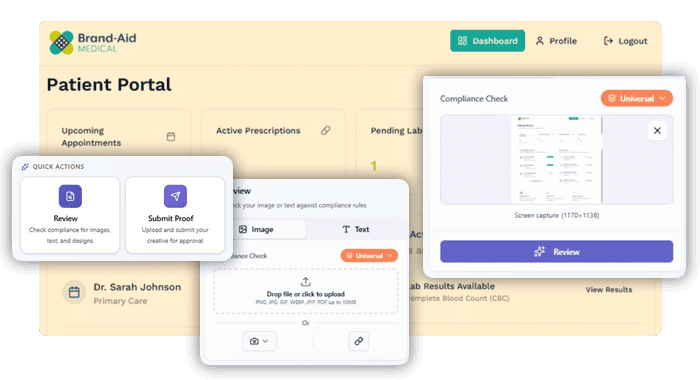
For teams working in Canva, Lytho AI is built directly into the design experience. Users can check their work against brand and compliance standards and submit it for review without switching tools.

Together, these capabilities ensure that compliance is applied at the point of creation, not just at the point of review.
Turn your DAM into a system of record
Governance does not stop at creation and review. Content also needs to be managed, understood, and reused.
The Lytho AI DAM Bundle turns your asset library into a system of record for your content. Instead of relying on manual tagging and organization, AI automatically generates metadata, descriptions, and alt text, making every asset easier to find and use.
AI-powered search allows teams to locate content using natural language, reducing dependency on perfect metadata and improving discoverability across large libraries.
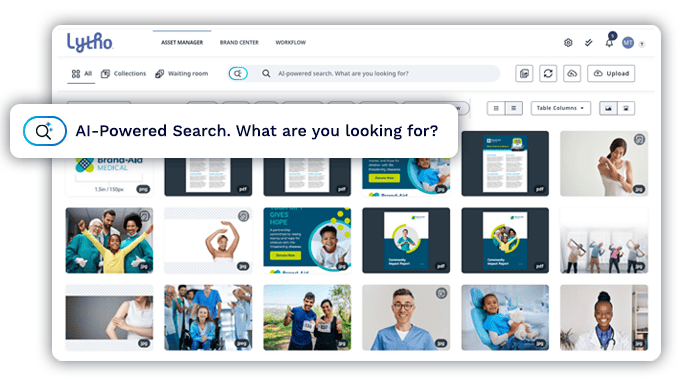
This means every asset is not just stored, but immediately usable, searchable, and governed from the moment it is added.
Bring intelligence into your reports and projects
Beyond compliance, Lytho AI Teammates bring intelligence into project management and reporting.
AI Project and Report Insights allow teams to ask questions about their reports and projects, surface risks, and generate status updates automatically. Instead of manually pulling data and building reports, teams can quickly understand performance and identify issues.
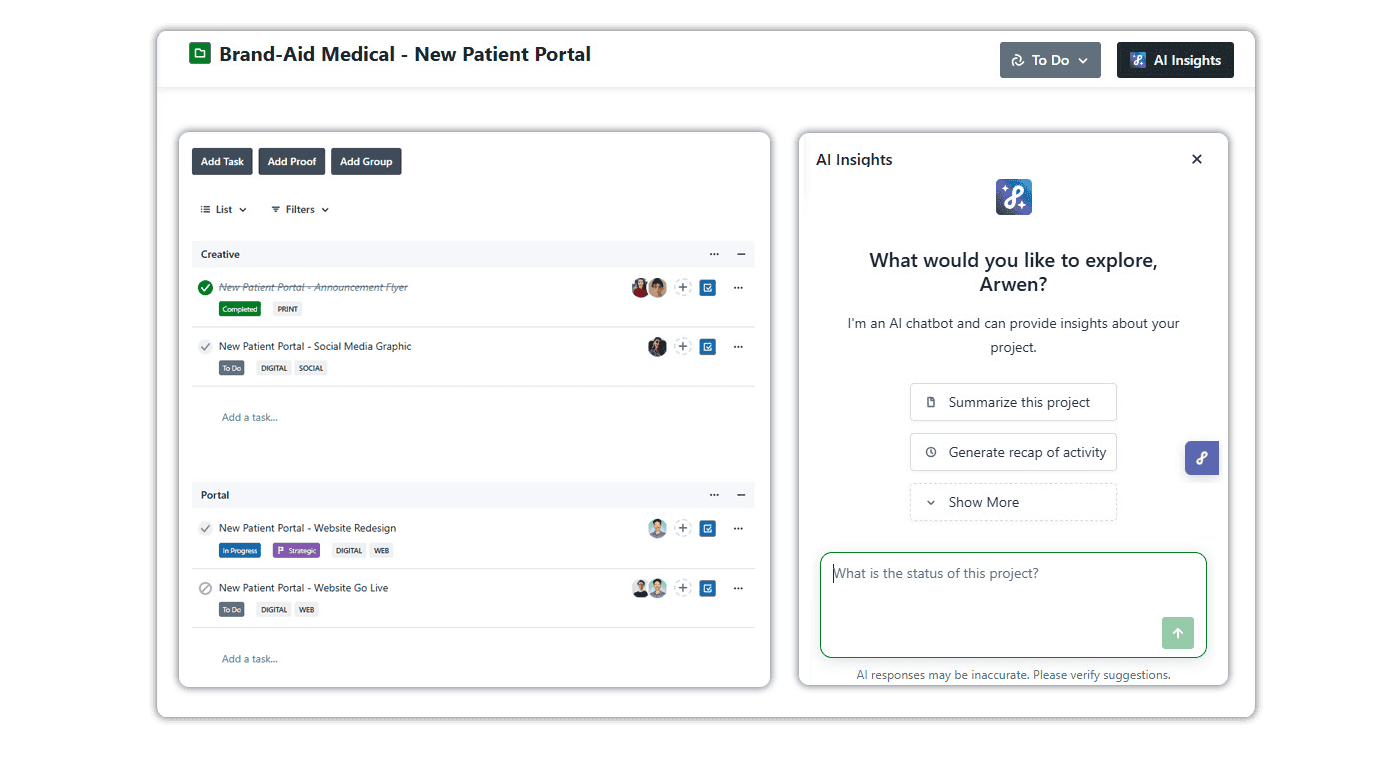
This gives every team access to real-time insight without adding additional overhead.
Built for the enterprise content ecosystem
Content does not live in a single system. It spans tools for creation, collaboration, publishing, and storage.
Lytho AI Teammates are designed to work across this ecosystem, providing a unified layer of governance and intelligence across every system where content is created and managed.
This ensures that standards are applied consistently, regardless of where work happens.
A new foundation for content operations
Content is not slowing down. It is accelerating.
To keep up, governance cannot remain a manual, centralized process applied after the work is done. It needs to be embedded, scalable, and continuous.
Lytho AI Teammates provide that foundation. By combining AI and human expertise within a single system, organizations can scale content creation while maintaining control, consistency, and compliance.
Frequently asked questions
What is AI-powered content governance?
AI-powered content governance is an approach where AI and human expertise work together to ensure brand consistency, compliance, and quality across the entire content lifecycle. Instead of relying only on manual review after content is created, AI applies standards directly within workflows, content systems, and creation tools so governance can scale with how content is produced today.
How does Lytho AI help enforce brand and compliance standards?
Lytho AI Teammates enforce brand and compliance standards by embedding checks directly into the way content is created and reviewed. AI reviewers evaluate content within proof workflows, while integrations in tools like browsers and design platforms allow teams to check content before it is published. At the same time, AI enhances asset management by automatically organizing and enriching content, ensuring it remains compliant and easy to use across the organization.
Where does Lytho AI work within the content lifecycle?
Lytho AI Teammates work across the full content lifecycle. It participates in review workflows to catch issues early, extends into the tools where content is created so teams can apply governance at the point of creation, and enhances content systems by automatically organizing and enriching assets. This creates a unified system where governance is continuous, not limited to a single step or tool.