Why disconnected tools and manual workflows put financial services brands and reputations at risk
A single off-brand social post or skipped compliance step can trigger regulatory scrutiny and unravel years of hard-earned brand trust. For financial services marketing teams, the margin for error is razor-thin. Yet many still rely on a patchwork of disconnected tools, including email chains, spreadsheets, and scattered asset repositories, to manage creative work and regulatory compliance. This creates risk, slows down delivery, and threatens the consistency that is vital in banking and insurance.
This post explores how fragmented operations increase exposure and why centralizing creative operations is now necessary for reducing compliance risk, protecting brand equity, and meeting the demands of today’s content demands.
The risks of fragmented creative operations
Fragmented creative operations happen when marketing teams use a mix of unconnected tools and manual processes, scattering approvals across emails and chat threads while assets live in multiple folders or drives. Spreadsheets try to track feedback and status. This setup may seem familiar, but it introduces serious risks.
Regulatory compliance gaps: When disclosures, legal language, or asset versions are missed in the shuffle, compliance failures can follow and expose organizations to penalties.
Brand inconsistency: Outdated logos, incorrect messaging, and unauthorized creative slip through, eroding trust and diminishing the brand’s reputation.
Operational pain: Teams experience delays, confusion, and duplicated work as they hunt for the right files or chase approvals, making it increasingly difficult to operate efficiently.
For financial services organizations, these risks matter even more. Strict regulations require airtight audit trails and proof of compliance at every step. A single mistake can mean fines or reputational damage, making control and clarity non-negotiable in this field.
Lytho is trusted by 600+ in-house agency teams to bring order and reliability to creative operations. By centralizing requests, reviews, and asset management, teams gain a single source of truth, reducing bottlenecks and supporting both compliance and brand integrity.
Why channel complexity and regulatory pressure make compliance harder than ever
The number of digital channels has exploded, from social and mobile to partner portals and new platforms. Each channel brings its own requirements for disclosures, formatting, and approval. Regulators are increasing scrutiny with higher standards for documentation and faster response times during audits.
Manual workflows can’t keep up. As content demands grow, the risk of missed steps, outdated assets, or inconsistent messaging rises. This can lead to significant consequences, such as regulatory fines, reputational harm, and a loss of stakeholder trust. Slow project delivery also means missed opportunities and frustrated partners.
More tools do not mean more control. Adding additional disconnected systems often makes compliance harder, not easier. Manual processes may feel secure but are prone to human error and lack the transparency regulators expect. To meet today’s demands, financial services teams need workflows that are both efficient and audit-ready, ensuring compliance and agility.
Centralizing creative operations as a practical solution
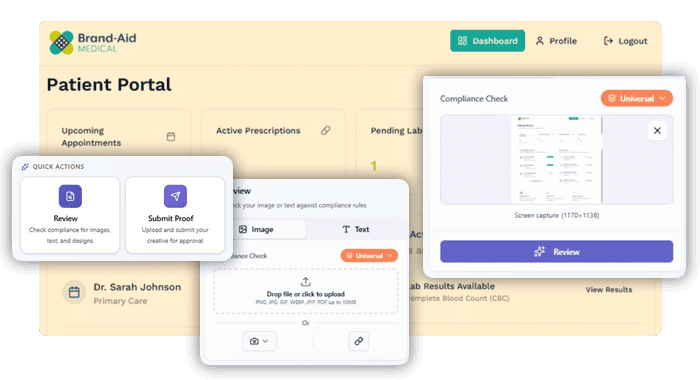
A unified creative operations hub brings together intake, reviews, approvals, and asset management in one solution. Automated compliance checkpoints ensure that every asset passes through the right approvals and includes required disclosures or legal language. Audit trails are created automatically, supporting both accountability and peace of mind.
Centralizing creative operations reduces regulatory risk by ensuring that only approved, up-to-date assets are used. Brand consistency improves as teams access the latest guidelines and creative elements from a single location. Automated workflows help teams scale content delivery without adding manual overhead or introducing new bottlenecks.
For financial services marketing leaders, this solution addresses the realities of channel complexity and regulatory pressure. Teams can move faster while maintaining control, meeting both brand and compliance goals.
Why centralization is essential for compliance and brand trust
Fragmentation in creative operations increases compliance risk, slows project delivery, and threatens brand consistency, especially in the high-stakes world of financial services. Centralizing creative workflows is no longer a nice-to-have. It is a foundational best practice for teams facing rising regulatory demands and accelerating content needs.
A unified, automated workflow is now necessary for protecting both brand and reputation. As you evaluate your current processes, consider whether your team is set up to deliver with speed, control, and confidence. The right solution can bring clarity, reduce risk, and help your organization thrive in a complex market.
Frequently asked questions
What are the most common compliance pitfalls for marketing teams in financial services?
Marketing teams in financial services often face compliance pitfalls such as inconsistent disclosures, missed approvals, and the use of outdated assets due to fragmented workflows. These issues can result in regulatory violations, fines, and damage to brand credibility. Without clear processes and centralized oversight, it’s easy for required legal language or version control to slip through the cracks. Addressing these gaps is critical to maintaining trust and avoiding costly mistakes. By proactively identifying and resolving these pitfalls, teams can protect their organization and streamline compliance efforts.
How can creative operations teams balance speed and compliance?
Creative operations teams can achieve both speed and compliance by centralizing workflows and leveraging automation for compliance checks. A unified system enables faster collaboration, reduces bottlenecks, and ensures that each asset passes through the necessary approval steps. Automation minimizes human error and makes it easy to track the status of every project in real time. This approach empowers teams to deliver content quickly while maintaining rigorous standards. Ultimately, it helps organizations meet deadlines without sacrificing regulatory requirements or brand integrity.
What features should a centralized creative operations solution offer to maximize brand consistency?
A centralized creative operations solution should offer integrated asset management, automated review and approval processes, and real-time compliance monitoring to maximize brand consistency. With these features, teams always have access to the latest brand assets and guidelines, reducing the risk of outdated or off-brand content being used. Automated workflows ensure that all materials go through the proper checks before publication, supporting both speed and accuracy. Real-time compliance monitoring provides immediate visibility into potential issues, making it easier to address them proactively. Together, these capabilities strengthen brand integrity and simplify compliance across all channels.