Find assets you can actually trust
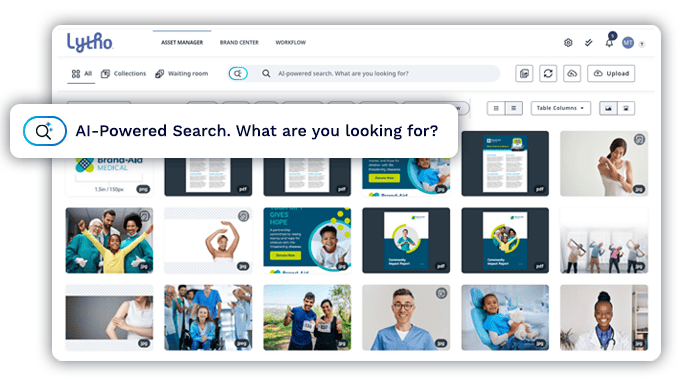
Most DAMs store everything, approved or not. That creates risk at scale. Lytho ensures only reviewed, compliant assets make it into your library so your team always knows what’s safe to use.
Built on workflow and review — not added after
Most DAMs sit at the end of the process. Lytho connects asset management directly to intake, workflow, and approvals — so governance happens before content is stored.
Replace unmanaged assets with a governed DAM system
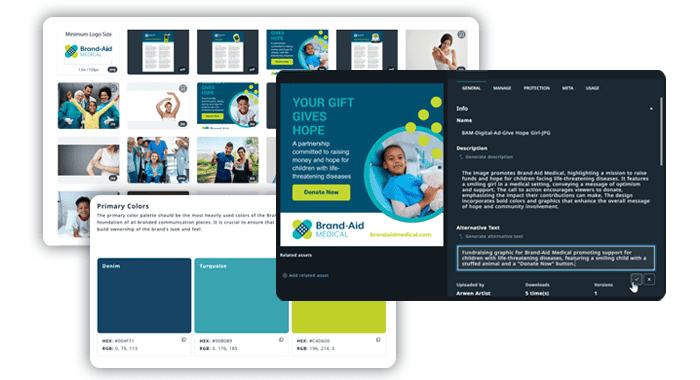
When assets are stored without governance, teams waste time, reuse the wrong content, and introduce risk. Lytho ensures every asset is approved, structured, and ready to use.
Click to enlarge 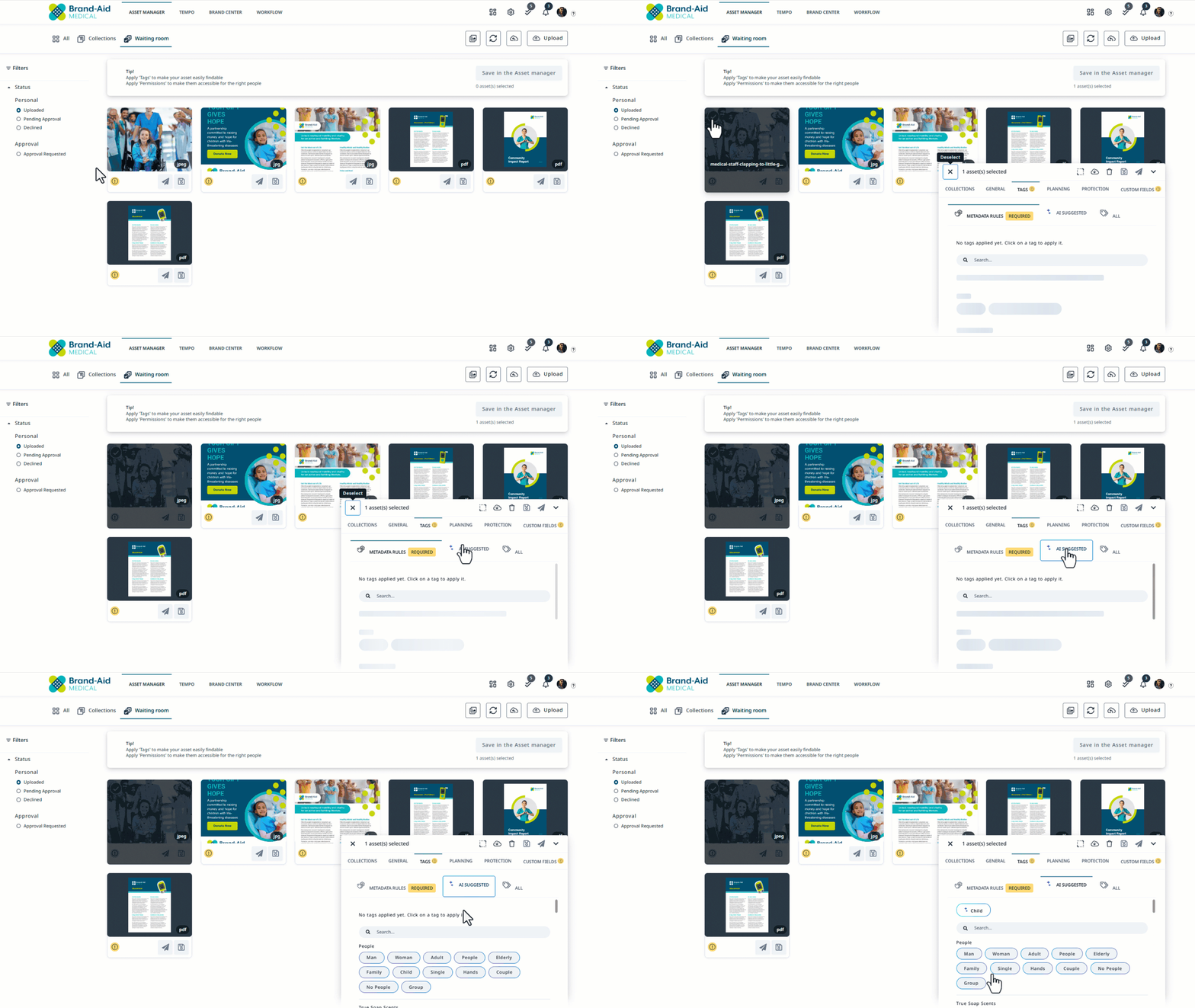 Click to enlarge
  Click to enlarge
Stop storing assets. Start governing them.
“We were migrating from a DAM we’d used for over 20 years. With our previous platform, we needed an outside developer just to get PIM working. With Lytho, our team figured it out themselves. It was already done before we even called it Phase 2. Our stakeholders love how easy it is to upload assets, share files, and stay organized. We’re really pleased.”


Trusted by teams managing high-volume, high-risk content




Frequently-asked questions about Lytho DAM
What is digital asset management (DAM)?
Digital asset management (DAM) is software that gives organizations a centralized, searchable repository for all their digital files — images, videos, brand guidelines, templates, documents, and more. Rather than hunting through shared drives, email threads, or cloud folders, teams can find approved assets instantly using metadata, tags, and AI-powered search.
But modern DAM goes beyond storage. Effective DAM software provides robust tools to streamline workflows, protect brand consistency, and foster collaboration across teams. It controls who can access, edit, or share specific assets, tracks version history so teams always work from the latest file, and integrates with the creative and marketing tools already in your stack.
The global DAM market is expected to grow from $3.96 billion in 2023 to $16.18 billion by 2032 — a signal that content-driven organizations are recognizing DAM as essential infrastructure, not a nice-to-have.
How does Lytho help with brand consistency across distributed teams?
The most common source of off-brand content isn’t bad intent — it’s inaccessibility. Teams use the wrong logo because they can’t find the right one. They run a campaign with an outdated product image because no one told them it had been replaced. They pull an asset from an old email because it was faster than searching the DAM.
Lytho DAM addresses this by making the right asset easier to find than the wrong one. AI-powered search, consistent metadata tagging, and a well-structured taxonomy mean that someone searching for “Q3 product hero image” finds the current, approved version — not a three-year-old file sitting in a shared drive. Expiration dates and rights management controls remove outdated or non-compliant assets from active circulation automatically, so teams can’t accidentally use something they shouldn’t. Role-based permissions ensure that regional teams, agencies, and external partners only see the assets they’re authorized to use.
For organizations managing multiple brands, product lines, or regional variations, Lytho DAM can be structured to reflect those divisions — separate collections, separate permissions, separate metadata schemas — while still giving brand and creative leadership a unified view across everything. The result is that brand consistency becomes a function of how the system is organized, not how vigilant every individual user happens to be.
How does Lytho DAM prevent teams from using outdated or non-compliant assets?
Lytho DAM uses expiration dates, rights management controls, and permission-based access to ensure that only current, approved assets are available to the right people. When an asset expires — a patient consent image, a licensed photo, a product image from a discontinued line — it can be automatically archived or flagged, removing it from active circulation without deleting the record. Administrators can also restrict access to sensitive asset categories by user role, business unit, or region, so teams only ever see what they’re authorized to use.
How does search actually work in Lytho DAM, and how do we set it up correctly?
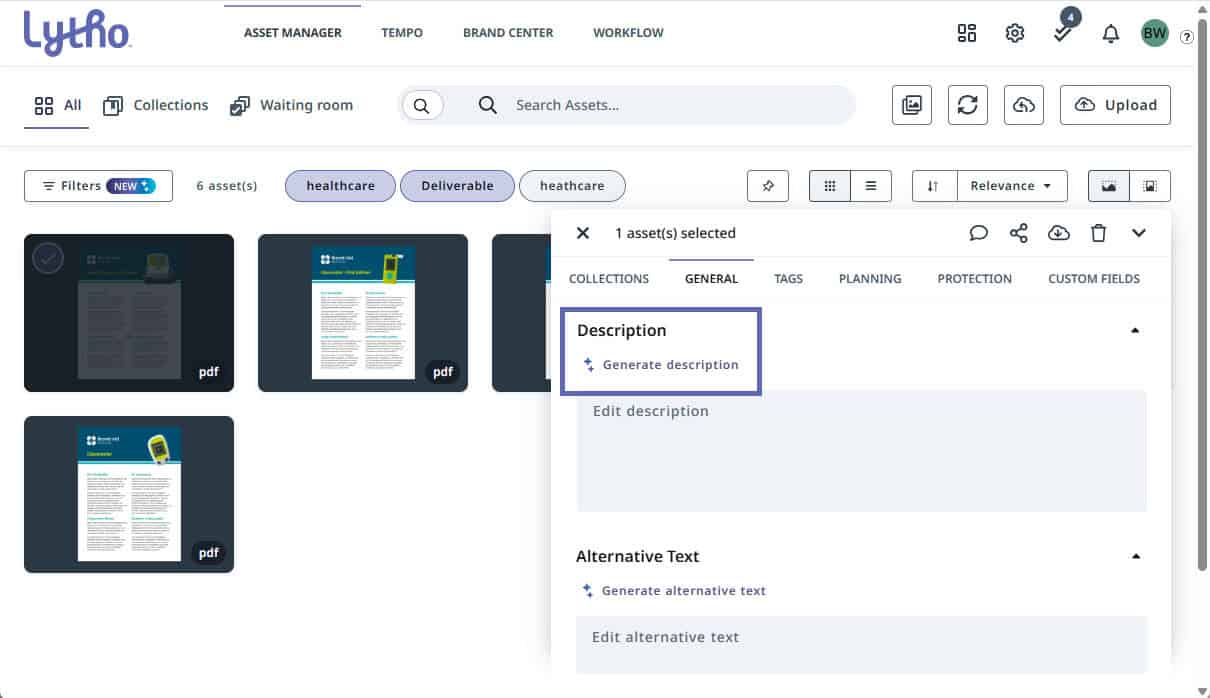
Lytho uses AI-powered metadata tagging and a search engine that recognizes synonyms, typos, and keyword variations — so users find what they’re looking for even when they don’t know the exact file name. During implementation, Lytho’s team works with you to build a taxonomy (folder structure, tag categories, metadata fields) that matches how your organization actually thinks about content. After that, new assets can be tagged automatically based on content recognition, and manually curated by admins. The quality of search is directly tied to the quality of your taxonomy, and Lytho provides guided best practices to get this right from day one.
Can Lytho DAM integrate with Adobe Creative Cloud, our CMS, or marketing automation tools?
Yes. Lytho offers native plugins for Adobe Creative Cloud (Photoshop, Illustrator, InDesign), allowing designers to search, pull, and push assets without leaving their creative environment. There are also integrations for WordPress and Drupal, and Lytho’s API enables connecting to CMSs, marketing automation platforms, PIM systems, and other tools in your stack. For organizations that distribute content through multiple downstream channels, this means assets flow from Lytho to the right destination without manual re-uploading or re-tagging. Lytho adds new integrations regularly; visit the Lytho integration page.
In addition, Lytho’s Chrome Extension lets content creators review assets in any web-based content creation or design tool, and even review assets for compliance after they have been published online.
How much does DAM software cost?
DAM pricing varies widely based on number of users, storage volume, modules included, and vendor. Lytho does not publish pricing publicly — like most DAM vendors, Lytho builds custom quotes based on your organization’s specific needs.
For context on the broader market: Aprimo’s starting point for DAM alone is around $20,000 per year, scaling higher as modules are added. Bynder and other enterprise-tier platforms operate in similar ranges.
The more useful question for budget conversations is total cost of ownership. A DAM that consolidates intake, workflows, proofing, and asset management replaces multiple point tools — reducing both license costs and the time your team spends switching between systems. The right way to evaluate Lytho’s price is against the cost of the status quo: lost hours, duplicated assets, off-brand content, and missed deadlines.
Request a demo to get a quote tailored to your team size and use case.
How does Lytho compare to Bynder, Canto, or Aprimo?
All three are legitimate DAM platforms, but they serve different buyer profiles.
Bynder is optimized for simplicity and speed for marketing teams focused on brand execution — particularly those who want fast access to branded templates and portals. It’s a strong choice if ease of use is your top priority and your workflow needs are very basic.
Aprimo is designed for enterprise-scale content operations, offering deep support for workflow automation, governance, and modular content — built for global enterprises that need more than just file storage. That power comes with complexity: Aprimo’s implementation is often complex and costly, frequently requiring third-party system integrators and extensive IT involvement, which can lead to higher expenses, longer deployment times, and a slower return on investment.
Lytho sits in a distinct position: Lytho is built specifically for creative and marketing teams that need both a capable DAM and end-to-end creative workflow management — without enterprise implementation overhead. 82% of teams using Lytho’s unified creative workflow solutions report increased content output, and 80% of Lytho users report they were able to reduce revisions to three or fewer. Lytho is trusted by more than 400 in-house agency teams who need a single system for intake, creative production, approvals, and asset management — not a standalone file library bolted onto a separate project tool.
If you’re a mid-market or enterprise team that creates a high volume of content and needs workflow control alongside asset management, Lytho is worth a direct comparison.
Turn your DAM into a system of control
Replace fragmented tools and unmanaged assets with governed content from creation to use. Scale faster. Reduce risk. Stay in control.